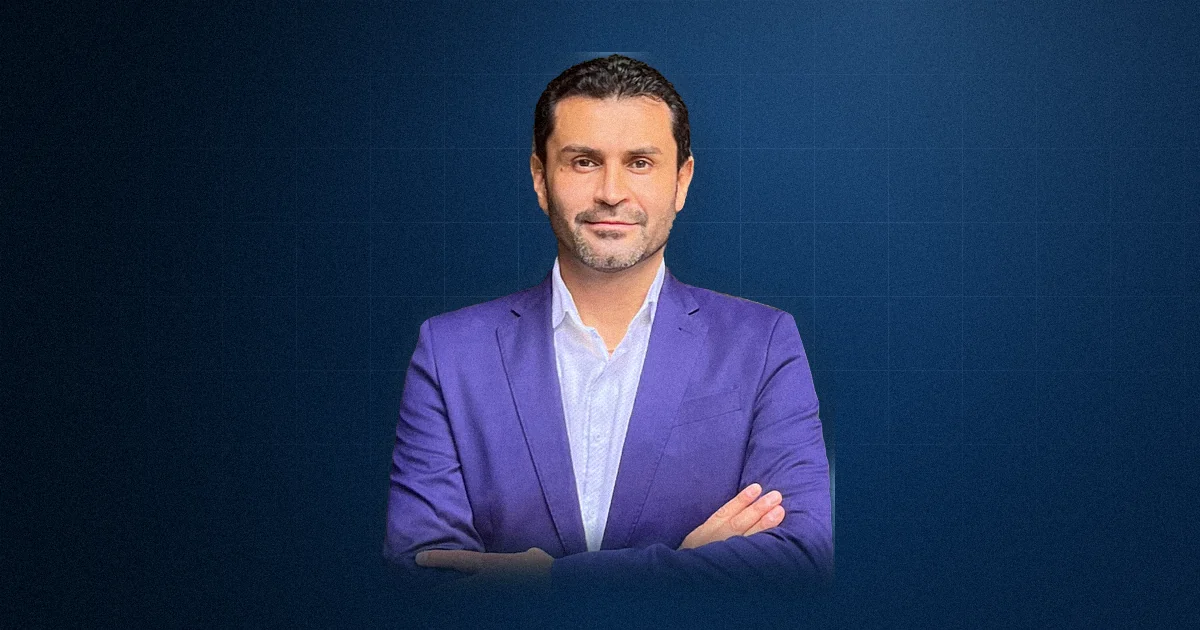
Oscar Bonilla, PhD
"Trust the process." It's a phrase Oscar Bonilla constantly repeats to his students. It sounds simple, almost cliché. But behind those three words lies a truth that separates those who get results from those who quit: success is not an event, it's an accumulation.
Trust the process. Don't look for the quick result. Look for the right result.
— Oscar Bonilla, PhD
The Learning Plateau: Why You Feel Like You're Not Making Progress
In 1994, psychologists K. Anders Ericsson and Neil Charness published a landmark study on expert performance acquisition. They discovered something every trader should know: human progress is not linear.
When you learn any new skill—a language, an instrument, trading—you experience what scientists call learning plateaus. These are periods where you feel like you're not improving despite continuing to practice. The temptation during these plateaus is to give up or switch strategies.
But research shows that plateaus are a sign that your brain is reorganizing information. You're transitioning from conscious processing (thinking through every step) to automatic processing (executing without hesitation). It's exactly what happens when you learn to drive: at first, you think about every action; later, you drive without thinking.
The Marshmallow Test and Delayed Gratification
In the 1960s, psychologist Walter Mischel conducted one of psychology's most famous experiments at Stanford University. He offered 4-year-olds a marshmallow with a promise: if they waited 15 minutes without eating it, they would receive two.
The follow-up results were eye-opening: decades later, the children who managed to wait achieved better academic results, higher incomes, and lower rates of addiction. The ability to delay gratification—to trust that waiting is worth it—proved to be one of the best predictors of long-term success.
In trading, delayed gratification shows up in decisions like: respecting your stop loss (accepting a small loss today to protect your capital tomorrow), staying out of the market when there's no clear signal (giving up the thrill of "being in the market" to gain consistency), and continuing to practice with low risk when you'd rather trade big.
The 10,000-Hour Rule, Revisited
Malcolm Gladwell popularized the idea that it takes 10,000 hours of practice to master a skill. Ericsson's original research is more nuanced: it's not 10,000 hours of any practice, but of deliberate practice—targeted exercises, immediate feedback, and constant adjustments.
In the context of trading, this means:
- Log every trade (trading journal) along with the reasoning behind it
- Review your mistakes—not to punish yourself, but to identify emotional patterns
- Practice with real money at low risk (penny stocks, small contracts) so the emotion is real
- Have a mentor or system that provides structured feedback
The "Shortcut" Fallacy
In an era of Telegram trading signals, automated bots, and "copy trading," the promise of a shortcut is seductive. But there's a fundamental problem:
Copying trades makes you a cook, not a chef. If someone changes the ingredients, you won't know what to do.
— Oscar Bonilla, PhD
A study from the University of California, Berkeley, found that traders who use signal services without understanding the logic behind the trades perform significantly worse than those who develop their own methodology, even if that methodology is simpler.
The reason is psychological: when you don't understand why you entered a trade, you don't know when to exit. Every fluctuation creates anxiety because you lack your own framework of reference.
Consistency vs. Perfection
Oscar emphasizes that consistency doesn't mean winning every trade. It means executing your plan disciplinedly, trade after trade, regardless of any individual outcome.
It's the same logic casinos use: they don't win every hand of blackjack, but their statistical edge, applied consistently over thousands of hands, guarantees profitability. The consistent trader is the casino, not the gambler.
With a 50% win rate and a 2:1 win/loss ratio, a trader is profitable. You don't need to be right 90% of the time—you just need your wins to be twice as large as your losses when you're wrong. And that's only achieved through disciplined risk management, trade after trade. Process.
The First Step: Trusting Before Seeing
Trusting the process means acting with discipline even when results aren't immediate. It means following your trading plan when you've hit three losing trades in a row. It means not abandoning your training when you feel like you're "not making progress." It means remembering that the plateau isn't the end of the road—it's part of the road.
The opposite of fear isn't courage. It's confidence. And confidence is built through repetition.
— Oscar Bonilla, PhD
This article is based on content by Oscar Bonilla, PhD, enriched with research by K. Anders Ericsson (1994) on deliberate practice, Walter Mischel (1972) on delayed gratification, and data from studies published in the Journal of Financial Markets.